
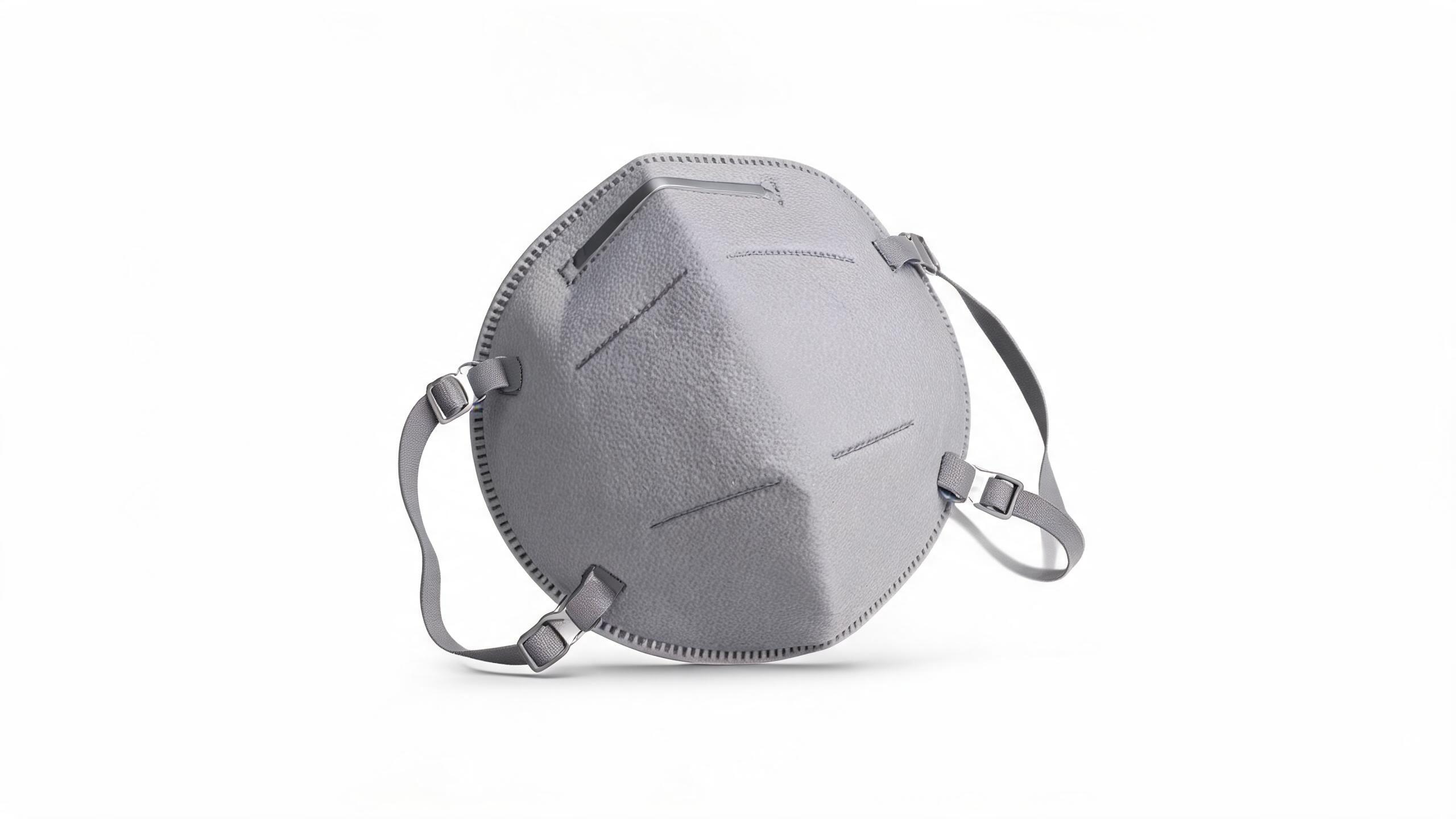
A comprehensive guide to KN95 respirator fit testing and usage, covering GB2626-2006 standards, qualitative vs quantitative fit testing methods, cup-style vs valve-style selection, OSHA program requirements, seal check procedures, and extended use guidelines.
Respiratory Protection Program Guide
Why KN95 Fit Testing Matters More Than Filtration Ratings Alone
A KN95 respirator rated for ≥95% filtration efficiency at 0.3 microns provides excellent protection - but only if it forms an effective seal against the wearer's face. A respirator that leaks at the edges can lose 20-50% of its protective efficiency, potentially dropping actual protection below the level of a well-fitted surgical mask. This is why respiratory protection standards worldwide require fit testing as a mandatory component of any PPE program, not an optional add-on. This guide covers fit testing methods, usage protocols, and program management for organizations deploying KN95 respirators in healthcare and industrial settings.
Key Takeaway: Filtration efficiency is a material property; actual protection depends on face seal quality. OSHA requires annual fit testing for all respirator users in regulated environments. Cup-style and valve-style KN95 respirators serve different use cases - cup designs offer structural stability for extended wear, while valve designs reduce breathing resistance in physically demanding settings.
Understanding the KN95 Standard: GB2626-2006 Explained
KN95 is a Chinese respiratory protection standard (GB2626-2006) that is broadly equivalent to NIOSH N95 (US, 42 CFR 84) and FFP2 (Europe, EN 149). The "KN" designation indicates a non-powered, air-purifying respirator that filters non-oil-based particles. Key performance requirements under GB2626 include:
- Filtration efficiency: ≥95% of non-oil-based airborne particles at 0.3µm mass median aerodynamic diameter (MMAD)
- Inhalation resistance: ≤350 Pa at 85 L/min airflow
- Exhalation resistance: ≤250 Pa at 85 L/min airflow
- Tightness: Total inward leakage (TIL) must not exceed 8% for 50 test subjects performing exercises
- CO₂ clearance: Dead space CO₂ content must not exceed 1%
| Standard | Region | Filtration Requirement | Particle Type | Equivalent Class |
|---|---|---|---|---|
| KN95 (GB2626-2006) | China | ≥95% at 0.3µm | Non-oil | N95 / FFP2 |
| N95 (42 CFR 84) | USA (NIOSH) | ≥95% at 0.3µm | Non-oil | KN95 / FFP2 |
| FFP2 (EN 149:2001) | European Union | ≥94% at 0.3µm | Oil & non-oil | N95 / KN95 |
| P2 (AS/NZS 1716) | Australia/NZ | ≥94% at 0.3µm | Non-oil | N95 / KN95 |
| DS2 (JMHLW) | Japan | ≥95% at 0.3µm | Non-oil | N95 / KN95 |
Fit Testing Methods: Qualitative vs. Quantitative
Fit testing determines whether a specific respirator model, in a specific size, creates an adequate seal on an individual wearer's face. There are two fundamentally different approaches:
Qualitative Fit Testing (QLFT)
Qualitative testing relies on the wearer's sensory detection of a challenge agent introduced around the respirator seal. It is a pass/fail test based on subjective response:
- Saccharin (sweet taste): Aerosolized saccharin solution; if the wearer tastes sweetness, the fit fails
- Bitter (Bitrex): Aerosolized denatonium benzoate; if the wearer tastes bitterness, the fit fails
- Irritant smoke: Stannic chloride smoke produces an involuntary cough response if leakage occurs (less commonly used due to safety concerns)
- Sensitivity: Detects fit factors up to approximately 100 (suitable for half-face respirators like KN95)
The test protocol requires the wearer to perform a series of exercises while wearing the respirator: normal breathing, deep breathing, turning head side to side, nodding up and down, talking, bending over, and returning to normal breathing. Each exercise lasts 60 seconds.
Quantitative Fit Testing (QNFT)
Quantitative testing uses instruments to measure the actual concentration of particles inside and outside the respirator, calculating a numerical fit factor:
- Ambient aerosol method (CNC): Uses a condensation nucleus counter to measure ambient particles both outside and inside the mask
- Generated aerosol method: Uses a controlled aerosol environment with a photometer for measurement
- Controlled negative pressure (CNP): Measures leakage by creating negative pressure inside the respirator
- Sensitivity: Detects fit factors up to 10,000+ (required for full-face respirators; more precise than QLFT)
For KN95 respirators, OSHA requires a minimum fit factor of 100 for half-face respirators. This means the concentration of particles inside the mask must be at least 100 times lower than outside.
Cup-Style vs. Valve-Style KN95: Choosing the Right Design
KN95 respirators are available in several design configurations, each optimized for different use scenarios:
Cup-Style KN95 Respirator
The cup-style design uses a rigid thermoplastic shell that maintains its shape without collapsing against the mouth during speech or heavy breathing. Key characteristics include:
- Structural stability: The rigid cup maintains consistent seal geometry throughout extended wear
- Extended wear comfort: Soft foam inner lining reduces facial pressure points; suitable for 8+ hour continuous use
- Sealed edge protection: The pre-formed edge conforms to facial contours more consistently than flat-fold designs
- Weight: Lightweight construction (approximately 4.5g per unit for Justsun's cup respirator)
- Best for: Medical settings, prolonged clinical use, environments requiring consistent seal integrity
Valve-Style KN95 Respirator
The valve-style design incorporates a one-way exhalation valve that reduces breathing resistance and heat buildup during exhalation:
- Reduced breathing resistance: The one-way valve opens during exhalation, allowing warm, moist air to exit directly without passing through the filter material
- Heat and moisture management: Significantly reduces interior temperature and humidity compared to non-valved designs
- Inhalation protection maintained: The valve closes during inhalation, forcing all inhaled air through the filter media
- Five-layer construction: Meltblown polypropylene with electrostatic layer for enhanced particle capture
- Best for: High-temperature environments, physically demanding work, industrial settings, extended active use
Important Note: Valved respirators protect the wearer but do not filter exhaled air. In environments where source control (protecting others from the wearer's exhaled particles) is required - such as surgical settings or pandemic response - non-valved respirators should be used.
OSHA Respiratory Protection Program Requirements
Organizations requiring respirator use in the United States must comply with OSHA's Respiratory Protection Standard (29 CFR 1910.134), which mandates a written program with the following elements:
- Written program: Documented procedures for respirator selection, use, maintenance, and training
- Medical evaluation: Workers must be medically cleared to wear respirators before fit testing (respirators impose breathing resistance that may affect individuals with cardiovascular or respiratory conditions)
- Fit testing: Annual fit testing for each respirator model and size the worker will use
- Training: Workers must be trained on proper donning, doffing, seal checking, maintenance, and limitations of their respirators
- Maintenance and storage: Procedures for cleaning, inspecting, and storing respirators (applicable to reusable models; disposable KN95s are single-use)
- Program evaluation: Regular review of program effectiveness and workplace conditions
How to Perform a User Seal Check
A user seal check (also called a fit check) is a quick verification performed by the wearer each time they don a respirator. It is not a substitute for formal fit testing but provides a critical final check before entering a hazardous environment:
Positive Pressure Check
- Place the palm of your hand lightly over the exhalation valve (if present) or over the front of the respirator
- Exhale gently into the respirator
- The respirator should bulge slightly outward without air leaking from the edges
- If you feel air escaping at the nose bridge or chin, adjust the nose bridge and straps, then retest
Negative Pressure Check
- Cover the filter surface completely with both palms (for cup-style, cover the entire cup)
- Inhale deeply
- The respirator should collapse slightly inward without air entering from the edges
- If air leaks in, readjust the straps and nose bridge, then retest
If a proper seal cannot be achieved after adjustment, the respirator model may not be compatible with the wearer's facial structure. In this case, an alternative model or size should be tried, and a new fit test conducted.
Common Fit Test Failure Points and Solutions
| Failure Point | Cause | Solution |
|---|---|---|
| Nose bridge leak | Insufficient nose wire adjustment or incompatible nose shape | Re-mold nose bridge; try alternative model with stronger nose wire |
| Chin leak | Respirator too small for wearer's face | Select a larger size or model with extended chin coverage |
| Strap tension | Over-tightened (distorts seal) or under-tightened (insufficient contact) | Adjust straps to firm but comfortable tension; ensure even distribution |
| Facial hair | Beards, stubble, or sideburns break the seal | Wearer must be clean-shaven in seal area; alternative PPE required if shaving is not possible |
| Facial structure | Deep facial scars, missing teeth, or prominent cheekbones | Try multiple models; may require quantitative fit testing to verify |
| Glasses interference | Temple pieces disrupt strap positioning | Adjust strap routing; consider models with strap configurations compatible with eyewear |
Extended Use and Reuse Guidelines
While KN95 respirators are designed as single-use devices, supply constraints during public health emergencies have necessitated extended use and limited reuse protocols. The CDC provides guidance for crisis capacity strategies:
- Extended use: Wearing the same respirator for multiple patient encounters without removing it between patients. Preferred over reuse because it reduces handling and contamination risk
- Limited reuse: Removing and storing the respirator between uses for a limited number of donnings (typically ≤5). Requires proper storage in a breathable container (paper bag, not plastic)
- Discard if: The respirator is visibly soiled, damaged, difficult to breathe through, or the straps are stretched or broken
- Maximum wear time: Cumulative wear should not exceed 8 hours total for non-valved models; valve models may tolerate slightly longer use in less contaminated environments
- Storage between uses: Store in a clean, dry paper bag labeled with the wearer's name and date of first use. Do not fold or crush the respirator
Respirator Selection Matrix by Application
| Application | Recommended Type | Valve? | Typical Wear Duration | Key Consideration |
|---|---|---|---|---|
| Surgical procedures | Cup-style KN95 | No valve | 4-8 hours | Source control required; no valve |
| General patient care | Cup-style KN95 | No valve | 4-8 hours | Extended wear comfort |
| Pandemic screening | Cup-style KN95 | No valve | 4-6 hours | Source control; frequent patient contact |
| Industrial dust protection | Valve-style KN95 | With valve | 8+ hours | Breathing resistance reduction |
| High-temperature work | Valve-style KN95 | With valve | 8+ hours | Heat and moisture management |
| Laboratory work | Cup-style KN95 | No valve | 4-6 hours | Contamination control |
| Construction/remodeling | Valve-style KN95 | With valve | 8+ hours | Dust and particulate protection |
Frequently Asked Questions
Is a KN95 respirator equivalent to an N95?
KN95 (GB2626-2006) and N95 (NIOSH 42 CFR 84) have similar filtration requirements (≥95% at 0.3µm), but they are not identical. N95 is a US NIOSH certification requiring NIOSH-approved testing facilities. KN95 is a Chinese standard. During emergency situations, the CDC has authorized use of KN95 respirators meeting GB2626-2006 as alternatives to N95, but for routine regulated use, NIOSH-approved N95 is required in the US.
How often should fit testing be conducted?
OSHA requires annual fit testing for all employees required to wear respirators. Additional fit testing is required when there are changes in the wearer's physical condition (significant weight change, facial surgery, dental work) or when a new respirator model or size is introduced.
Can I wear a KN95 with a beard?
No. Any facial hair that intersects the respirator's sealing surface will compromise the fit. A user seal check may appear to pass, but quantitative testing typically shows significant leakage. Wearers must be clean-shaven in the area where the respirator seals against the face.
What is the difference between a fit test and a seal check?
A fit test is a formal, documented procedure conducted annually using specialized equipment or challenge agents to verify the respirator achieves an adequate seal. A seal check (positive/negative pressure check) is a quick self-test performed by the wearer each time they don the respirator. Seal checks detect gross leaks but are not a substitute for fit testing.
When should I use a valved vs. non-valved KN95?
Use non-valved respirators when source control is required (protecting others from your exhaled particles), such as in surgical settings, pandemic response, or patient care. Use valved respirators in industrial settings, construction, or high-temperature environments where the primary concern is protecting the wearer and source control is not required.
How long can I wear a single KN95 respirator?
For routine use, a KN95 should be worn for a maximum of 8 cumulative hours. During crisis capacity situations (supply shortages), extended use beyond 8 hours may be necessary, but the respirator should be discarded if it becomes visibly soiled, damaged, difficult to breathe through, or if the straps lose tension.
What is total inward leakage (TIL)?
TIL is a measure of all particles entering the respirator through both filter penetration and seal leakage during simulated workplace exercises. GB2626 requires that TIL not exceed 8% across a panel of 50 test subjects. This is a more comprehensive measure than filtration efficiency alone, as it accounts for real-world fit variability.
Can KN95 respirators be cleaned or disinfected for reuse?
The CDC does not recommend decontamination of KN95 respirators for routine reuse. While crisis-capacity decontamination methods (UV-C, vaporized hydrogen peroxide) have been studied for N95 respirators, their effectiveness and safety for KN95 models has not been comprehensively validated. Discard and replace is the standard practice.
Building an Effective Respiratory Protection Program
A robust respiratory protection program goes beyond distributing respirators. It requires a systematic approach encompassing hazard assessment, respirator selection, medical clearance, fit testing, training, and ongoing program evaluation. Organizations deploying KN95 respirators should designate a program administrator, maintain documentation of fit test results and training records, and conduct periodic audits to ensure compliance.
For healthcare facilities and industrial organizations sourcing KN95 respirators, working with manufacturers who provide CE certification (GB2626-2006), detailed product specifications including filtration efficiency data, inhalation/exhalation resistance values, and total inward leakage test results is essential for both regulatory compliance and real-world protection.
Need CE-Certified KN95 Respirators?
Request specifications, filtration test reports, and pricing for our cup-style and valve-style KN95 respirators.
View KN95 Product Specifications